


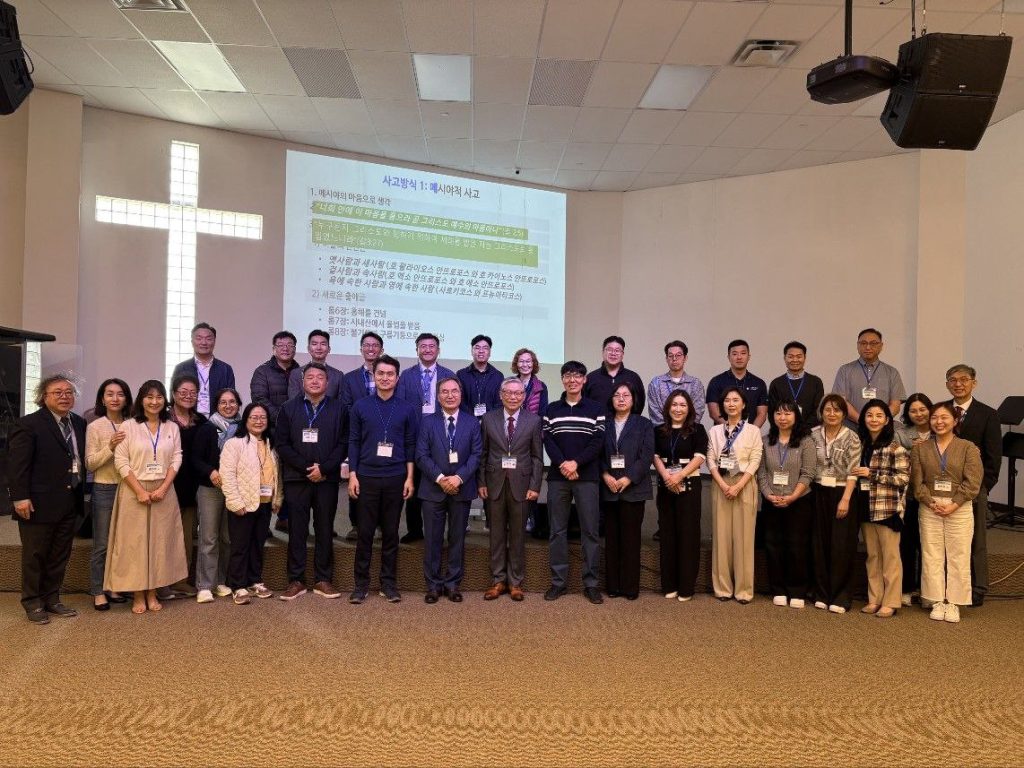
The 2026 Dallas Regional Ministry and Preaching Seminar clearly demonstrated once again that WMU is not merely a degree-granting institution but a field-oriented Christian university that actively reaches out to serve Korean immigrant churches and local communities. This seminar was designed as a form of community ministry that reflects on the complex challenges facing immigrant churches in the post-pandemic era and seeks to establish meaningful connections with local congregations. In particular, following WMU’s ministry engagement in the New York–New Jersey region in 2025, the visit to Dallas was strategic, as Dallas is home to an active Korean church community and a significant number of WMU students and alumni.
The significance of this Dallas Regional Ministry and Preaching Seminar lies in its presentation of an integrated framework for the future ministry of immigrant churches. The central message that ran throughout the seminar was the recognition that “church ministry is not merely about managing programs, but about nurturing the spirituality and lives of people.” The seminar was structured with the understanding that when preachers engage not only with preaching itself but also with broader areas such as spirituality and counseling, their pastoral insight and ministry capacity are strengthened. Ultimately, this integrated approach provides practical support for the ministries of local church preachers. In this way, the seminar illustrated how WMU fulfills its mission by connecting academic education with the real needs and challenges of local churches.
Looking at the lectures by theme, the preaching seminar first addressed how preaching must develop in response to the changing realities of immigrant churches. While raising important questions about preaching ethics in the age of AI, the lecture did not simply warn against technology. Instead, it suggested that preachers may use AI as a “copilot,” while carefully safeguarding the boundaries of creativity and authenticity. Drawing on WMU’s accumulated experience in preaching projects, the seminar also proposed principles for preaching that are text-centered, begin with real-life questions, reflect the realities of immigrant communities, and aim not merely to convey information but to form spirituality. In particular, the four-step preaching structure—“empathizing with reality, illuminating the biblical text, presenting a gospel-centered turning point, and applying it to life”—was presented as a practical tool that local pastors can readily apply in their ministries.
While placing preaching at the center, the seminar also addressed additional areas such as spirituality and counseling so that preachers could develop an integrated understanding of pastoral ministry beyond preaching techniques alone. This approach aimed to broaden preachers’ perspectives on the life and ministry of the church while strengthening their pastoral insight and ministry competence.
The seminar on soul care and spiritual formation emphasized that the essence of human spirituality becomes even more important in the age of AI. While AI can process language and information, it cannot replace human capacities for understanding meaning, making judgments based on experience, bearing responsibility, or cultivating deep relationships. The seminar therefore reaffirmed that the core ministry of the church is not simply the transmission of information but the restoration of spirituality formed through a relationship with God. This perspective pointed to the need for churches to maintain their spiritual center even amid rapid technological change.
The seminar on mental health care ministry highlighted the urgent need for churches to respond to the growing mental health crisis that has intensified since the pandemic. While many individuals experiencing mental distress seek help first from pastors rather than professionals, the reality is that many pastors have not received sufficient training in recognizing and responding to mental health challenges. The seminar therefore proposed several practical strategies, including reducing stigma through preaching and education, establishing mental health coaching ministries, developing Christian counseling centers, and creating financial support funds. Through these approaches, the church can expand its role as a community that contributes to healing and restoration within the broader society.
In this way, the seminar aimed to broaden preachers’ perspectives and deepen pastoral insight by addressing multiple areas of ministry in an integrated manner while keeping preaching at the center. At the same time, this integrated approach provided practical guidance and encouragement for pastors and churches in the Dallas region as they seek to maintain the essence of the church and build healthy communities in a rapidly changing world.
The direct outcomes of the Dallas Regional Ministry and Preaching Seminar can be identified in several ways. First, the seminar offered church leaders in the Dallas area practical language and structural frameworks for ministry that can be applied within the evolving realities of immigrant churches. Each lecture went beyond the mere transmission of information and helped participants reinterpret key challenges—such as preaching, spirituality, and mental health—from integrated and practical perspectives. Second, the seminar established meaningful points of connection between WMU and churches in the Dallas region, building relationships grounded in trust. It demonstrated that WMU is not simply an academic institution with educational resources but also a partner capable of engaging with and supporting the real concerns of local churches. Third, the seminar showed strong potential for strengthening networks among WMU students, alumni, and local churches. Such connections can become valuable foundations for future regional ministry initiatives, student recruitment, alumni engagement, and expanded church partnerships.
In summary, the 2026 Dallas Regional Ministry and Preaching Seminar was a meaningful ministry that demonstrated WMU’s ability to accurately discern the realities and needs of Korean immigrant churches and to offer not only theoretical discussions but also practical solutions and sustainable models of collaboration. The three major themes addressed in the seminar—preaching, spirituality, and mental health—are likely to remain central issues for immigrant churches in the years to come. The seminar confirmed that WMU possesses unique strengths in partnering with local churches in these areas over the long term. At the same time, this ministry served as a concrete expression of WMU’s identity as “a university that exists for Christian ministry,” demonstrated not only in the classroom but also in active engagement with the field.