


1. Overview of the Workshop
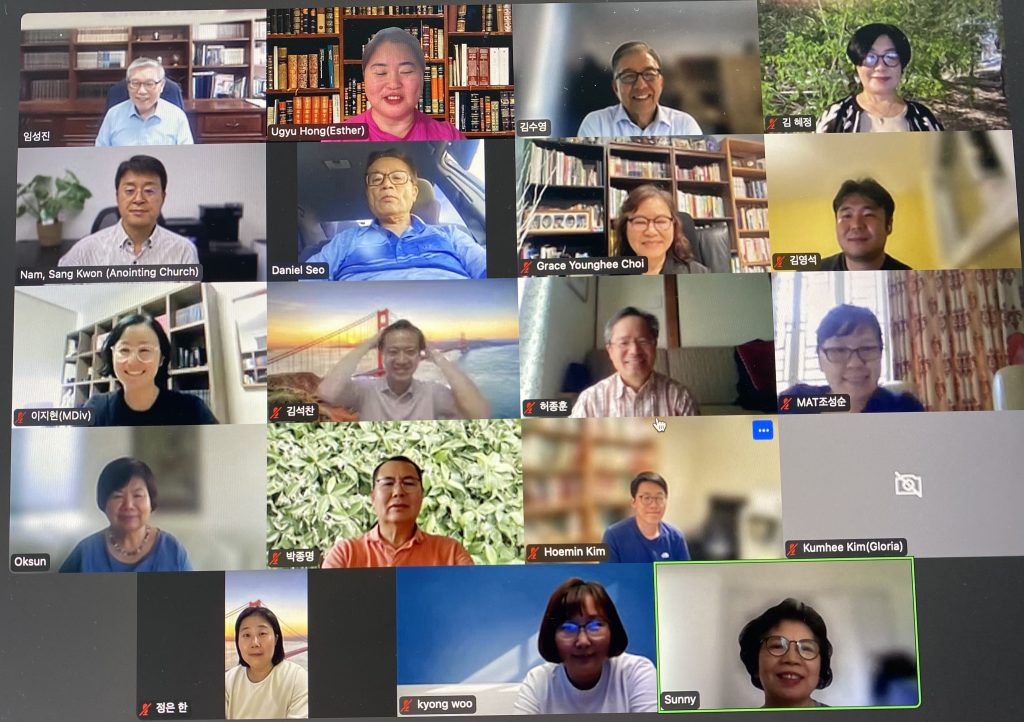
From August 21 to October 9, 2025, World Mission University conducted its second Story- Based Preaching Workshop via Zoom, held every Thursday evening. The eight-week training provided a transformative space for preachers who longed to deepen their love for Scripture and strengthen their preaching ministry.
A total of 19 preachers participated, engaging in a collaborative learning environment that transcended physical boundaries through online interaction. The workshop created a unique platform for participants to explore the art of narrative preaching and to practice how storytelling can bring renewed vitality to biblical proclamation.
2. Learning Objectives and Pedagogical Process
The curriculum was carefully designed to guide participants through the full process of sermon preparation—from text observation (exegesis) and interpretation (exposition) to application (delivery).
Participants revisited principles learned in previous expository training—such as the six journalistic questions (who, what, when, where, why, how) and narrative flow indicators—and applied them to reconstruct biblical texts.
Through detailed analysis of time, place, events, ideas, and character psychology, participants produced structured exegetical outlines and developed expository frameworks that highlighted each passage’s central theological themes. In the final phase, they practiced constructing deductive, inductive, and hybrid sermon outlines, refining them into full sermon drafts enriched with vivid narrative elements.
3. Key Outcomes
Rather than serving as a mere lecture series, the workshop became a turning point for practical ministry development. Participants expressed a renewed sense of calling and creativity, sharing how the insights gained would directly inform their future sermon preparation and delivery.
The workshop confirmed that story-based preaching not only strengthens intellectual understanding but also fosters emotional and relational engagement—transforming both preacher and audience.
Above all, participants embraced the conviction that “the path of preaching can always open anew.” Through lectures and interactive sharing, they rediscovered preaching as a transformative process that renews the text, the audience, and the preacher alike.
4. Participant Feedback and Evaluation Findings
A post-workshop survey revealed significant findings and valuable suggestions:
Positive Impacts:
1. Verification of the practical effectiveness of narrative preaching education
2. Evidence of potential for scalable preacher training models
3. Contribution to the ongoing development of WMU’s homiletics curriculum
4. Reinforcement of learner-centered and participatory approaches
Recommendations for Improvement:
1. Expansion of case-based, hands-on exercises
2. Strengthening training on emotional tone and character movement
3. Adoption of a small-group coaching model
4. Rebalancing of theoretical and practical components
5. Advancement of evaluation and assessment tools
6. Broader thematic exploration in future workshops
5. Conclusion and Future Directions
The August 2025 Story-Based Preaching Workshop effectively strengthened participants’ structural and thematic understanding of biblical narratives while revealing the need for more expressive, emotional, and interactive elements in sermon training.
This workshop validated the transformative potential of story-based preaching as both a pedagogical method and a spiritual discipline, laying the foundation for WMU’s continued leadership in culturally sensitive and narrative-driven homiletical education.
Moving forward, WMU plans to integrate these learnings into its Voices of Faith initiative and expand the model to include bilingual workshops and intercultural preacher training sessions for broader community impact.